Cost to fix uneven basement floor: 2026 price guide and repair options
⏱️ 8 min read · Last updated: 2026
The cost to fix an uneven basement floor depends on whether the problem is structural or cosmetic, and that diagnosis changes everything. In 2026, most repairs run between $3 and $25 per square foot, with moisture mitigation often deciding whether the job lasts. Because the wrong repair can fail fast, the first step is always to check the slab, the soil, and the moisture beneath it before you spend a dollar on leveling.
- Self-leveling compound cost: $3–$7 per square foot installed, or $0.50–$1.25 per square foot in materials if DIY
- Polyurethane foam injection: $5–$25 per square foot, with most residential jobs totaling $800–$2,500
- Moisture barrier installation: adds $1–$3 per square foot before leveling when relative humidity exceeds 75% RH
- Moisture limit: more than 3 lbs of vapor per 1,000 sq ft per 24 hours requires mitigation before leveling
- Structural threshold: floors sunken more than 1.5 inches need foam injection or mudjacking, not cosmetic leveling
Structural lift vs. cosmetic leveling: how to tell which basement floor repair you need
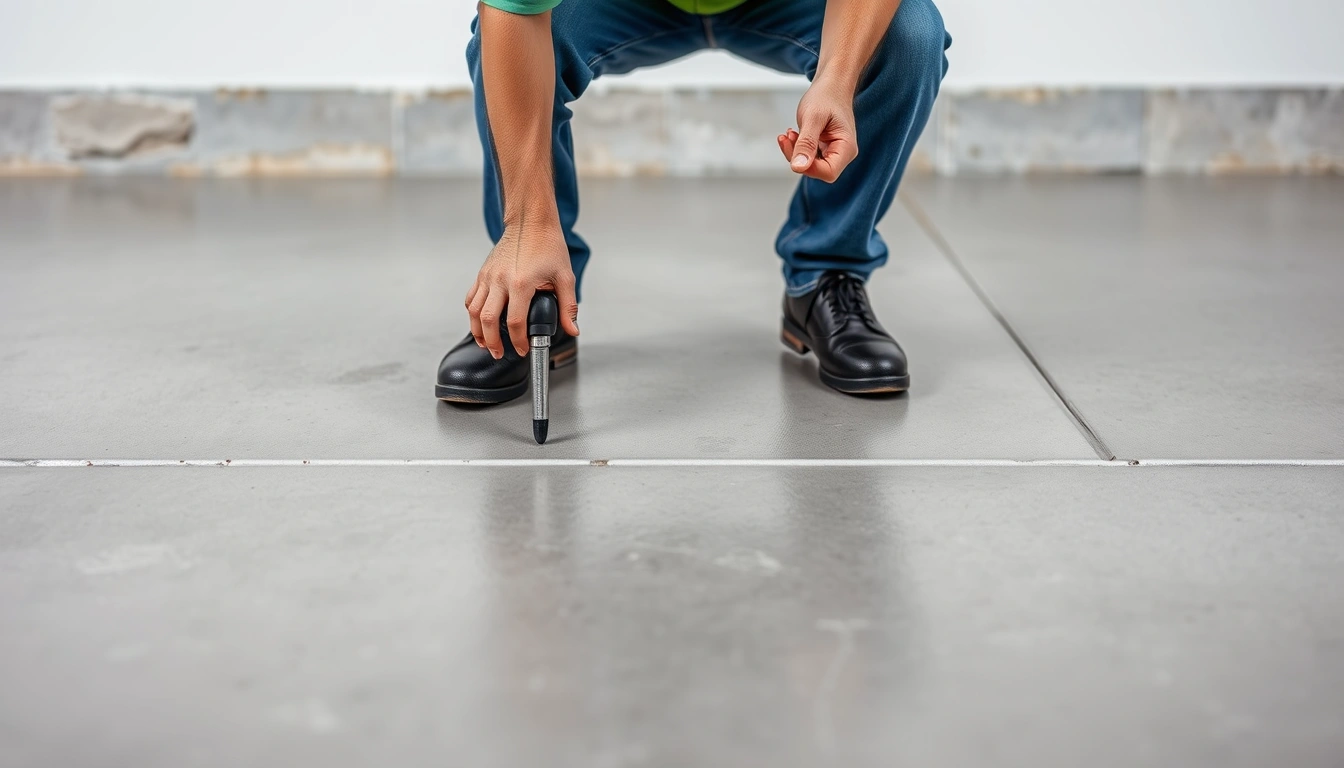
Before comparing prices, settle one question: does your basement floor have a structural settlement problem or a cosmetic surface problem? That answer drives the method, the price, and whether the floor stays level. A structural problem means the slab has sunk, tilted, or cracked because the soil below shifted, washed out, or compressed — think a slope of more than 1.5 inches over 10 feet, cracks running the length of the slab, or sections that rock underfoot. This damage needs lifting first, usually with polyurethane foam injection or mudjacking. A cosmetic problem means the slab is stable but rough, pitted, or slightly uneven, often from shrinkage cracks, wear, or a poor original pour. In that case, self-leveling compound is the correct choice because it smooths the surface without lifting the slab.
| Indicator | Structural settlement | Cosmetic unevenness |
|---|---|---|
| Drop over 10 ft | More than 1.5 inches | Less than 1.5 inches |
| Crack pattern | Wide, continuous, offset edges | Hairline or surface-only cracks |
| Slab movement | Sections flex or rock | Solid, no flex |
| Correct fix | Foam injection or mudjacking first | Self-leveling compound |
| Typical cost range | $5–$25 per sq ft | $3–$7 per sq ft installed |
How much does it cost to level an uneven basement floor?
With the diagnosis settled, here is what those two paths cost. The cost to level an uneven basement floor usually ranges from $3 to $25 per square foot in 2026, and a 400–600 sq ft basement often lands between $1,200 and $6,000 depending on the method, the amount of prep work, and whether moisture mitigation is needed. Self-leveling compound is the lower-cost option for cosmetic unevenness, at $3–$7 per square foot installed, or $0.50–$1.25 per square foot in DIY materials when the slab is dry and stable. Polyurethane foam injection costs more but solves structural settlement; most residential jobs run $800–$2,500 total, or about $5–$25 per square foot depending on void size and access. Mudjacking usually runs $3–$8 per square foot, but it is less ideal indoors than foam.
| Method | DIY cost | Professional cost | Best for |
|---|---|---|---|
| Self-leveling compound | $0.50–$1.25/sq ft | $3–$7/sq ft installed | Cosmetic unevenness under 1.5 in. |
| Polyurethane foam injection | Not DIY-viable | $5–$25/sq ft | Structural settlement, voids under slab |
| Mudjacking (slurry) | Not DIY-viable | $3–$8/sq ft | Outdoor slabs; less ideal indoors |
| Moisture barrier only | $0.30–$0.60/sq ft | $1–$3/sq ft installed | Pre-leveling vapor control step |
One cost most guides ignore is concrete grinding for high spots. If the slab has ridges or raised edges rather than low spots, grinding costs $1–$3 per square foot, which can add $400–$900 to a typical basement job.
A 500 sq ft basement floor leveled with self-leveling compound by a professional typically costs $1,500–$3,500 in 2026 once surface prep, primer, and moisture mitigation are included — not the $600 the materials-only sticker price suggests.
For comparison, exterior concrete follows different pricing logic. The patio leveling cost breakdown shows how outdoor exposure and access affect pricing versus interior basement work. If you want a broader comparison, how leveling costs compare across concrete project types explains how region, soil type, and slab thickness change the final number.
Is foam injection or self-leveling compound cheaper for a basement?
So which is actually cheaper? Self-leveling compound wins upfront, but foam injection is often cheaper over time when the floor has settled structurally — the right choice depends on the cause of the unevenness, not just the quote. Compound at $3–$7 per square foot installed smooths a stable slab, yet it adds weight and does not fill voids beneath the concrete, so it can fail if the floor keeps moving. Polyurethane foam injection at $5–$25 per square foot addresses the underlying void instead: it expands under the slab, lifts sunken sections, and cures in about 15 minutes. It is also water-resistant, which matters in basements where mudjacking slurry can wash out over time.
For floors that are only pitted, rough, or off by half an inch or less, self-leveling compound is the right and cheaper call, and products like Ardex K-15 or Henry 547 can accept flooring in 16–24 hours after curing. Even then, moisture prep still matters, because interior slab settlement usually gets worse if nothing fixes the water source. Seen that way, a $900 foam job in 2026 can be far cheaper than a $3,000 repair in 2029 if the void keeps growing. You can also review what to expect from a concrete leveling estimate to see how contractors measure void size and scope before quoting.
What moisture test should you run before leveling a basement floor?
Cost aside, no leveling job survives a wet slab, so testing comes before any self-leveling compound or floor covering goes down. This step protects the repair from bubbling, cracking, and delamination, and it tells you whether you need a moisture barrier first. The two standard tests are ASTM F1869 and ASTM F2170. ASTM F1869, the calcium chloride test, measures vapor emission over 60–72 hours; most self-leveling compounds and floor coverings need results under 3 lbs per 1,000 sq ft per 24 hours, and kits usually cost $25–$40. ASTM F2170 uses in-situ relative humidity probes at 40% of the slab’s depth, and most manufacturers want readings below 75–80% RH, which is more accurate for many commercial jobs. If the slab fails, you have two main options: a topical epoxy or polyurethane moisture barrier costs $0.30–$0.80 per square foot in materials and works when RH is in the 80–95% range, while a drainage mat system adds $1–$3 per square foot and suits severely wet slabs.
Temperature changes the result too, and skipping this check is the fastest way to inflate the cost to fix an uneven basement floor. Run the calcium chloride test when the basement is at its normal occupied temperature, usually 65–75°F; testing in a cold basement in January can give falsely low readings that do not reflect summer vapor drive. Once moisture readings are acceptable, you can move on to the repair itself.
How to level a basement floor step by step
Once moisture checks out, the leveling sequence matters as much as the material — skip steps or change the order and the repair can fail early. This process works for cosmetic leveling and for contractor-managed structural lift work.
- Diagnose first: Use a 6-foot or 10-foot straightedge in several directions. Mark low spots with chalk. If the deepest point is more than 1.5 inches below grade, stop and call a foam injection contractor.
- Run the moisture test: Place at least three ASTM F1869 calcium chloride test kits across the floor and wait 60–72 hours. Proceed only once every kit reads within your compound’s stated moisture limit.
- Address moisture if needed: If you fail the test, apply a two-part epoxy moisture mitigation primer to the clean, dry slab surface. Apply two coats per manufacturer specs and let it cure for 12–24 hours. Do not continue if readings are above 95% RH.
- Prepare the slab surface: Grind high spots, ridges, and raised crack edges with an angle grinder and diamond cup wheel. Vacuum all dust. Fill structural cracks wider than 1/8 inch or offset at the edges with rigid epoxy crack filler.
- Prime the slab: Use the primer recommended for your self-leveling compound. The primer should be tacky, not dry, when the compound is poured.
- Mix and pour the self-leveling compound: Follow the water-to-powder ratio exactly. Use a drill with a paddle mixer for 2–3 minutes per bag. Pour into low spots first and let the product flow across the surface.
- Manage the working time: Most self-leveling compounds give you 10–20 minutes of working time. Work in sections small enough to finish within that window. Do not rework material that has started to set.
- Allow full cure before loading: Light foot traffic is usually fine in 4–6 hours. Wait 24 hours before installing flooring or loading the surface, and 48–72 hours for heavy materials.
Why basement floors keep settling after repair
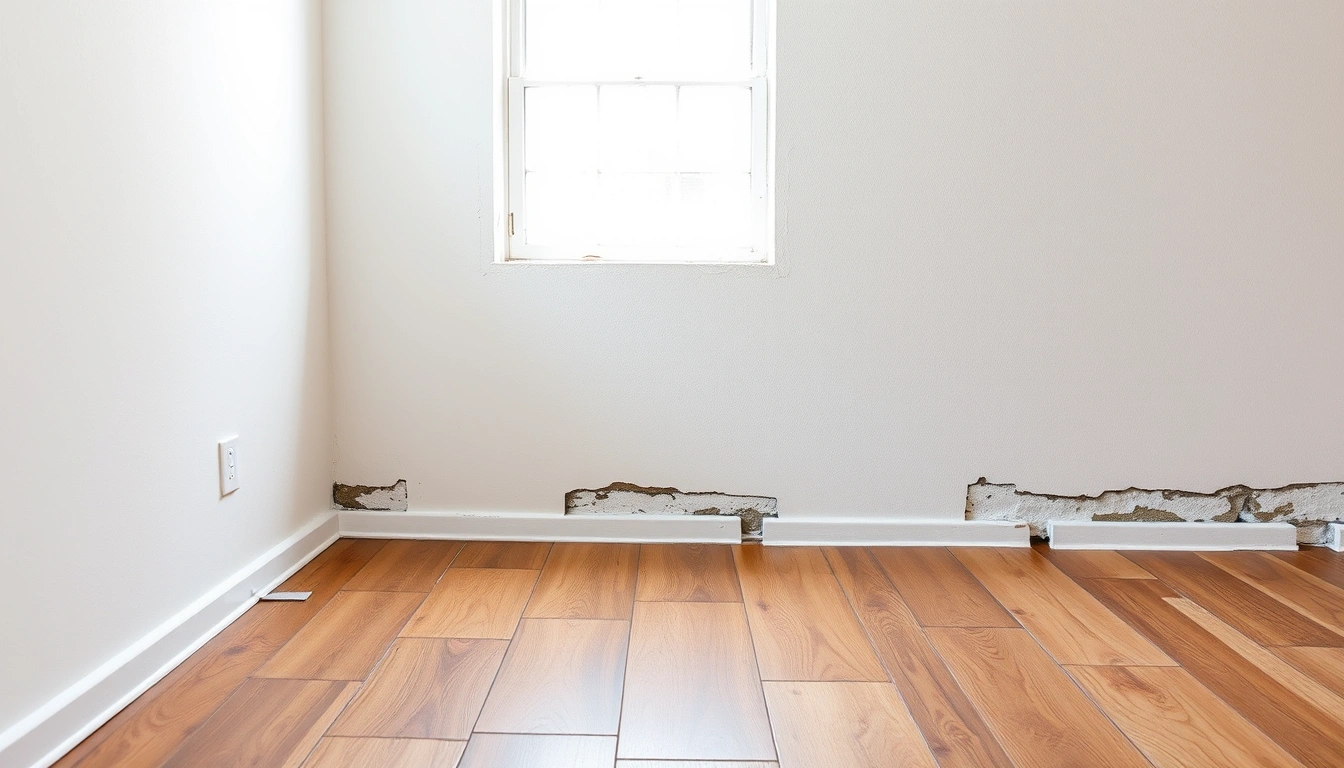
Even a flawless leveling job is temporary if the water problem beneath it is never fixed, which is why basement floors keep settling after repair. A well-done job can fail within 18 months if water keeps eroding the sub-base. The most common cause is water washing away or weakening the granular soil beneath the slab, driven by poor drainage, plumbing leaks, and hydrostatic pressure. Repair only the surface and the slab can move again, which is how the cost to fix an uneven basement floor doubles over a few years: one homeowner can spend $4,000 on foam injection and compound work and still see the same area sink because the downspout keeps sending roof water toward the foundation. Before you sign a repair contract, ask the contractor to identify the water source. A good foam contractor should inspect the perimeter and may recommend drainage correction before lifting. Other causes of repeat settling include:
- Tree roots compressing or displacing sub-base soil next to the foundation
- Plumbing leaks under the slab, which a pressure test can help detect
- Expansive clay soils that swell and shrink with the seasons
- Original fill soil that was never compacted properly during construction
In many cases, fixing a $300 drainage problem upstream prevents a $3,000 basement floor repair downstream.
The same root-cause logic applies to other concrete surfaces. The driveway leveling cost estimate follows the same settlement logic, even though outdoor slabs face different drainage patterns. If you are comparing multiple projects, the concrete leveling cost guide shows how region, soil type, and slab thickness affect pricing.
What else changes the cost to fix an uneven basement floor?
Beyond the square-foot rate, several factors move the final cost to fix an uneven basement floor up or down. The slab’s condition, moisture level, access, and prep work all matter. High spots cost money too: if the floor has ridges, concrete grinding can add $1–$3 per square foot, because some basement floors need material removed before leveling, not just filling. Access can also affect pricing — tight stairs, low ceilings, finished walls, or heavy contents make prep and installation slower and often push a job toward the higher end of the quoted range. Moisture mitigation changes the budget fastest, since a slab that needs a barrier or drainage mat costs more than a dry slab that can go straight to priming and leveling, which is why a low quote that leaves out prep can mislead. Finally, the repair method drives long-term value: self-leveling compound is cheaper when the slab is stable, while foam injection costs more upfront but often prevents a repeat repair when the problem is structural. If you need to compare pricing across related jobs, the concrete leveling estimate process explains how contractors decide on void size and scope. For exterior work, the patio leveling cost page shows how outdoor exposure changes the math.
Key takeaways
- The cost to fix an uneven basement floor ranges from $3–$7/sq ft for self-leveling compound to $5–$25/sq ft for foam injection in 2026
- Floors sunken more than 1.5 inches need structural repair, while less severe unevenness can usually be corrected cosmetically
- Any slab emitting more than 3 lbs of vapor per 1,000 sq ft per 24 hours needs moisture mitigation before leveling
- A 500 sq ft basement floor can cost $1,500–$3,500 with professional self-leveling once prep, primer, and moisture work are included
- Fixing drainage upstream can prevent a repeat repair and protect a floor that would otherwise settle again
See also: concrete leveling cost guide
See also: driveway leveling cost estimate
See also: concrete leveling free estimate what to expect
Related: floor flatness FF number
Frequently asked questions about basement floor leveling costs
How much does it cost to fix an uneven basement floor?
Most basement floor leveling jobs cost $3–$25 per square foot in 2026. Cosmetic fixes with self-leveling compound are usually cheaper, while structural settlement that needs foam injection costs more.
Is self-leveling compound cheaper than foam injection?
Yes, self-leveling compound is usually cheaper upfront at $3–$7 per square foot installed. Foam injection costs more, but it is the better choice when the slab has settled structurally.
How do I know if my basement floor problem is structural?
If the slab drops more than 1.5 inches over 10 feet, has wide continuous cracks, or rocks underfoot, it is likely structural. That usually calls for foam injection or mudjacking.
What moisture test should be done before leveling a basement floor?
ASTM F1869 and ASTM F2170 are the standard tests. Most self-leveling systems require vapor emission below 3 lbs per 1,000 sq ft per 24 hours or relative humidity below 75–80%.
Why do basement floors settle again after repair?
Basement floors settle again when the water source is not fixed. Poor drainage, plumbing leaks, hydrostatic pressure, tree roots, and uncompact fill can all keep eroding the soil under the slab.
How long does self-leveling compound take to cure?
Light foot traffic is often possible in 4–6 hours. Most flooring can be installed after 24 hours, and heavier loads usually need 48–72 hours.
See also: concrete leveling cost guide
See also: driveway leveling cost estimate
See also: concrete leveling free estimate what to expect