“`html
Polyurethane concrete lifting lifespan: what the warranty won’t tell you
⏱️ 7 min read · Last updated: 2026
- Typical lifespan: 5–10+ years depending on soil type and climate — stable, well-drained soil trends toward the high end; expansive clay soil trends toward the low end.
- Foam density: Structural polyurethane foam used for concrete lifting typically ranges from 2 to 4 lb/ft³ — denser foam (3–4 lb/ft³) resists soil movement resettlement better under heavy slabs.
- Warranty period: Most professional installers offer a polyurethane warranty period of 2–5 years; some premium contractors extend to 7 years on residential work.
- Freeze-thaw cycle tolerance: Quality polyurethane foam injection is chemically stable through hundreds of freeze-thaw cycles — the foam itself doesn’t crack or degrade; frost heave acts on the soil, not the foam.
- Job time vs. mudjacking: Polyurethane foam injection typically takes 1–3 hours for a standard driveway panel vs. a full day or more for mudjacking, with cure time under 30 minutes before foot traffic.
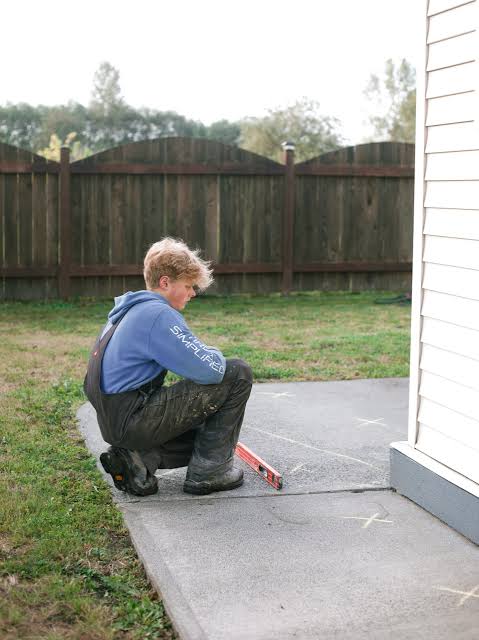
Is foam leveling worth double the price? Usually yes — and the reason is under the slab, not on the invoice. The polyurethane concrete lifting lifespan question is almost always framed around the material itself, when the real answer lives in three feet of soil beneath your feet. The foam outlasts the marketing claims when drainage is right, and underperforms them when it isn’t.
Most articles you’ll find quote the manufacturer warranty — two years, five years, sometimes seven — as if that number describes when the slab will sink again. It doesn’t. A warranty period tells you when the contractor is legally on the hook. It says almost nothing about real-world foam lifting durability in your specific soil and climate. That gap is exactly what this article fills, starting with how the process actually works at a mechanical level.
How polyurethane foam injection actually lifts concrete — and where it can fail
Polyurethane foam injection works by drilling small holes — typically 5/8 inch in diameter — through the concrete slab, then injecting two-part expanding foam beneath it. That foam fills voids and exerts upward pressure, lifting the slab back to grade. The foam expands and cures within minutes, which is why traffic can resume so quickly. The material bonds to both the underside of the slab and the soil surface below, creating a stable interface between the two.
Here’s what most explanations skip: the foam is not mechanically anchoring the slab to bedrock. It fills a void and stabilizes the immediate sub-base. If the soil beneath that sub-base continues to shift — because of water infiltration, root intrusion, or seasonal soil movement resettlement — the slab can eventually move again. The foam stays intact. The surrounding soil gives way. That distinction matters when you’re trying to predict how long polyurethane concrete lifting will last in your specific situation.
Soil type is the variable nobody advertises
Once you understand how the foam works, the next question becomes obvious: what’s happening in the soil around it? Soil type is the single biggest predictor of polyurethane concrete lifting lifespan — more than brand, more than foam density, more than installer skill. Expansive clay soil is the most problematic. Clay shrinks when it dries and swells when it absorbs water, and that cycle of movement puts lateral and vertical stress on any leveled slab over time.
In regions dominated by expansive clay soil — much of the American Southeast, Texas, and parts of the Midwest — resettlement commonly begins within 3–5 years if the source of moisture fluctuation (broken irrigation lines, poor grading, clogged gutters) isn’t corrected alongside the leveling job. The foam itself typically remains intact, but the slab above it shifts as the clay moves around it. Granular soils behave in the opposite way: they drain quickly, don’t expand or contract with moisture, and provide a stable platform for the foam to hold against. If you have a sunken slab on sandy ground with no ongoing water issue, foam leveling can hold for a decade or more without intervention. For a closer look at how soil composition affects the repair approach, the guide on concrete leveling for sandy soil breaks down what changes when you don’t have clay to contend with.
| Soil type | Drainage behavior | Typical resettlement risk | Expected foam lifespan |
|---|---|---|---|
| Sandy / granular | Fast draining, stable | Low | 10–15+ years |
| Loamy / mixed | Moderate drainage | Moderate | 7–12 years |
| Expansive clay soil | Poor drainage, high movement | High | 3–7 years |
| Organic / fill | Variable, compresses over time | Very high | 2–5 years (repeat lifts likely) |
Will polyurethane concrete lifting hold up in freeze-thaw winters?
Soil type explains most of the variation in warm climates. In cold climates, a second variable enters the picture: freeze-thaw cycles. The good news is that the foam itself handles them very well. Polyurethane foam injection uses a closed-cell material, meaning it doesn’t absorb water, so it won’t crack, expand, or degrade as temperatures cycle below and above freezing. In controlled testing, structural polyurethane foams maintain their compressive strength through hundreds of freeze-thaw cycles without measurable breakdown.
The real threat in cold climates is frost heave — and that’s a soil phenomenon, not a foam failure. Frost heave occurs when water in the soil freezes and expands, pushing upward against whatever sits above it. A leveled slab in a climate with 80+ frost cycles per winter will experience upward pressure every season, and even well-stabilized foam can’t prevent the slab above it from moving if the soil underneath is saturated before a freeze. What this means practically: in Zone 5 or colder, polyurethane concrete lifting lifespan is closely tied to how well water is managed around the slab. A slab with proper slope-away grading, sealed joints, and clear gutter discharge will outlast an identical slab with standing water pooling nearby by several years. The foam holds. Water management is the variable.
In climates with 50 or more freeze-thaw cycles per year, frost heave — not foam degradation — is the primary reason polyurethane leveled slabs require re-treatment within 5–8 years.
Why structural foam density lb/ft³ matters more than brand name
Climate and soil explain when a foam lift might fail. Foam density explains whether it was right for the job in the first place. Not all polyurethane foam used for concrete lifting is the same, and foam density lb/ft³ is the spec that actually predicts load performance. Structural polyurethane foams for concrete lifting typically range from 2 to 4 lb/ft³. The denser the foam, the higher its compressive strength — meaning it can support heavier loads without slowly compressing over time.
A 2 lb/ft³ foam may be fine for a residential sidewalk panel. Under a garage floor bearing vehicle loads, or a commercial slab seeing regular forklift traffic, that same foam will compress gradually and the slab will creep back down — not because of soil movement resettlement, but because the foam wasn’t specified for the load. For high-load applications like concrete leveling for garage floor settlement, asking your contractor for the foam density spec upfront is a reasonable and important question. A 4 lb/ft³ structural foam typically has compressive strength in the range of 60–90 psi, compared to roughly 25–35 psi for 2 lb/ft³ foam — a meaningful difference for any slab under regular vehicle traffic. Get the spec in writing before the job starts.
| Foam density lb/ft³ | Typical compressive strength | Best application | Load risk if undersized |
|---|---|---|---|
| 2 lb/ft³ | ~25–35 psi | Sidewalks, pool decks, light residential | Gradual recompression under vehicle loads |
| 3 lb/ft³ | ~40–60 psi | Driveways, garage floors, residential heavy use | Low if correctly applied |
| 4 lb/ft³ | ~60–90 psi | Commercial slabs, loading docks, heavy equipment areas | Minimal |
How many years before polyurethane leveled concrete sinks again?
With soil type, climate, and foam density in mind, you can start to set realistic expectations for how long a specific job should last. In stable soil with good drainage, polyurethane leveled concrete commonly holds for 10 years or longer without measurable resettlement — some installations have been observed holding level for 15+ years. The slab moves only when the soil beneath it moves. Eliminate the trigger, and the repair is effectively permanent.
Realistically, most homeowners are dealing with conditions that aren’t perfectly stable. For a typical residential driveway in mixed soil with moderate seasonal moisture change, a well-executed foam lifting job should hold for 7–10 years before re-leveling might be considered. That’s a meaningful difference from mudjacking, where heavier slurry can wash out of voids in poorly draining soil within 3–5 years — a distinction worth understanding before signing a contract. The mudjacking vs polyurethane cost comparison puts those numbers side by side in a way that makes the 10-year math clearer.
One honest note: if your slab sank because of organic fill, an eroded tree root channel, or an active underground water source, foam leveling is a partial solution. It will lift the slab. It won’t fix the erosion. In those cases, 2–4 years before resettlement is a reasonable expectation — not a contractor failure. Understanding which category your situation falls into before the job starts is the most useful thing you can do to set accurate expectations for polyurethane concrete lifting lifespan.
Polyurethane concrete lifting lifespan in well-drained, stable soil commonly reaches 10–15 years — roughly double what mudjacking achieves in the same conditions, based on field-observed resettlement patterns.
The four things that shorten polyurethane concrete lifting lifespan faster than anything else
Knowing the typical range is useful. Knowing what causes a job to land at the low end of that range is more useful. Most resettlement within the first five years traces back to one of four causes — all of them avoidable or at least manageable with the right preparation.
- Unresolved water intrusion under the slab. If a downspout, French drain, or irrigation line is discharging water beneath the slab, the foam cannot stop ongoing erosion. Water pressure will eventually carve new voids around the foam, and the slab tilts again. Fix the water source before or alongside the foam job.
- Expansive clay soil with no drainage correction. Clay-heavy sub-bases saturated in spring and dried hard in late summer move significantly across seasons. Foam bridges the immediate void, but that seasonal clay movement can shift the slab laterally and vertically over multiple seasons. Improving perimeter drainage — even just regrading so water flows away from the slab edge — extends the repair by years.
- Using undersized foam density lb/ft³ for the actual load. A 2 lb/ft³ foam under a two-car garage floor will compress slowly under vehicle weight. The slab doesn’t crack — it just inches back down over 18–36 months. Confirm the foam density spec in writing before the job starts, and match it to the expected load.
- Skipping joint sealing after the lift. Open control joints and cracks allow water to re-enter the sub-base immediately after the job is done. Sealing joints with a flexible polyurethane caulk — not rigid mortar — within 30 days of a foam lift is a simple step that significantly extends polyurethane concrete lifting lifespan.
How to maintain leveled concrete so it actually holds
Avoiding the four lifespan-shortening mistakes gets you most of the way there. These six maintenance steps cover the rest — and the honest truth is that most homeowners do none of them. A leveled slab that gets even minimal attention will hold noticeably longer than one left completely unattended.
- Seal all joints within 30 days of the lift. Use a self-leveling polyurethane sealant rated for concrete joints. Avoid mortar or rigid fillers — they crack with movement and let water in at the exact point you’re trying to protect. Check that the sealant is fully adhered along both joint walls, not just sitting on top.
- Regrade soil along slab edges every spring. Over winter, soil often settles or washes away from slab edges, creating a low point where water pools. A 6-inch wide berm of compacted soil sloping away from the slab at roughly 1 inch per foot prevents pooling. It takes about 20 minutes with a flat shovel.
- Redirect downspouts at least 4 feet from any slab edge. A downspout discharging 3 inches from a slab edge can saturate the sub-base in a single heavy rain event. Extend the discharge pipe or install a splash block directing water away from the concrete — this single step has more impact on polyurethane concrete lifting lifespan than almost anything else on this list.
- Inspect joint sealant annually in early spring. Polyurethane caulk degrades under UV exposure over 3–5 years. Look for cracking, shrinkage, or gaps along sealed joints. Touch up with fresh sealant before the freeze-thaw season rather than after.
- Watch for new cracks at the slab edges, not the center. Edge cracks are the earliest indicator of renewed sub-base movement. A 1/16-inch edge crack forming near a previously lifted panel is worth noting and re-inspecting in six months. Center cracks often mean shrinkage, not settlement.
- Clear vegetation from slab edges. Grass and ground cover growing against a slab edge trap moisture and promote edge erosion. Keep a 2-inch clear zone along slab perimeters and use a weed barrier if needed. Root intrusion from larger shrubs near slab edges is a slow but consistent cause of soil movement resettlement over time.
These steps aren’t complicated, but they compound over time. For a complete overview of how foam lifting fits into the broader range of repair options — and which situations call for a different approach entirely — the guide on concrete leveling methods compared puts mudjacking, foam injection, and full replacement into context side by side. If your slab has significant cracking alongside the settlement, the concrete slab crack repair options guide covers when leveling alone is enough and when crack repair needs to happen first. And if you’re trying to decide whether polyurethane concrete lifting is the right call for your specific slab, the foam concrete lifting cost vs. replacement comparison walks through the numbers in plain terms.
- Polyurethane concrete lifting lifespan is primarily determined by soil type and drainage — not foam brand or warranty length.
- In stable soil, polyurethane concrete lifting commonly lasts 10–15 years; in expansive clay soil, expect 3–7 years without drainage correction.
- Structural foam density lb/ft³ must match the load — 2 lb/ft³ is insufficient under regular vehicle traffic; specify 3–4 lb/ft³ in writing.
- Sealing joints after a lift and regrading soil away from slab edges are the two highest-impact maintenance steps available to extend polyurethane concrete lifting lifespan.
Common questions about polyurethane concrete lifting lifespan
What is the real-world lifespan of polyurethane concrete lifting in clay soil?
In expansive clay soil without drainage correction, polyurethane concrete lifting typically lasts 3–7 years before meaningful soil movement resettlement occurs. Correcting the moisture source — a misdirected downspout, poor grading, a broken irrigation line —
See also: concrete leveling methods compared
See also: mudjacking vs polyurethane cost comparison
See also: concrete leveling for sandy soil
Related: concrete leveling for expansive clay soil
Related: concrete leveling market data
Related: polyurethane vs mudjacking for driveway

Related Posts
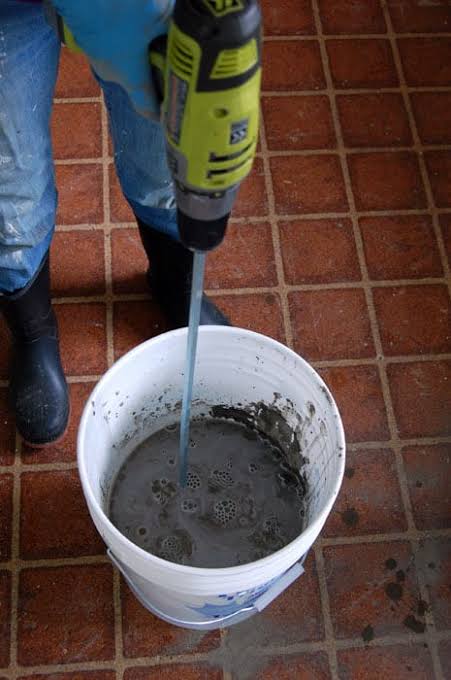
Concrete Leveling Process Steps: Drill, Lift, Patch Explained
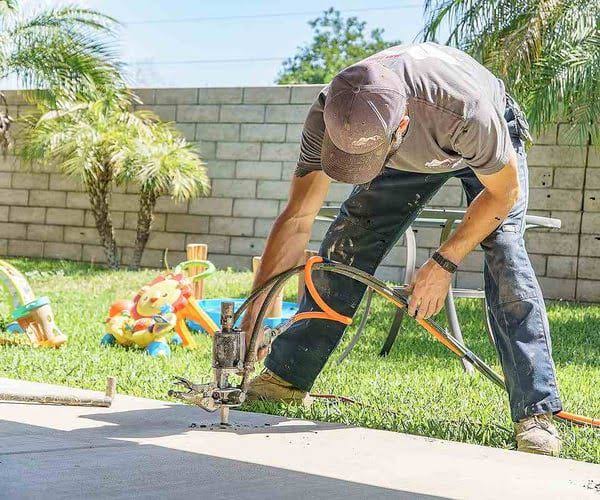
Polyurethane vs mudjacking for driveway