“`html
Concrete Leveling on Expansive Clay Soil: What Actually Works
⏱️ 7 min read · Last updated: 2026
- Expansive clay soil commonly moves 1 to 4 inches vertically per seasonal cycle depending on moisture fluctuation — some high-plasticity clays (PI above 35) have been documented moving up to 6 inches.
- Polyurethane foam injection is the recommended concrete leveling method on active shrink-swell soil; mudjacking adds 100–150 lbs per cubic foot of slurry, increasing slab load on soil that is already volume-unstable.
- Soil moisture stabilization (chemical lime injection or deep watering programs) typically costs $1,500–$4,500 for a standard driveway or patio zone before concrete leveling work begins.
- Slabs on untreated expansive clay soil commonly re-settle within 2–5 years of concrete leveling — and some contractors see repeat calls within a single wet-dry season.
- Polyurethane foam concrete leveling on a residential slab costs roughly $5–$25 per square foot in 2026 depending on lift height and access; mudjacking runs $3–$8 per square foot but carries higher recurrence risk on clay.
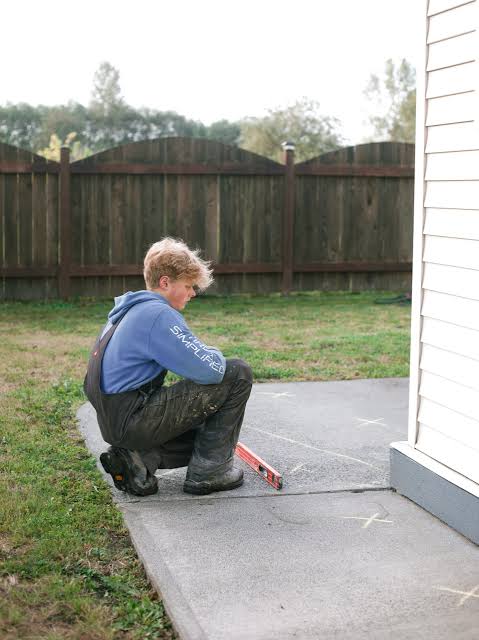
The crack ran the full length of the driveway apron — three-quarters of an inch wide by late spring, nearly closed again by August. That’s the signature of expansive clay soil doing exactly what geology designed it to do: absorb water and swell, dry out and shrink. Concrete leveling on expansive clay soil is a fundamentally different problem than leveling a slab on sandy or compacted fill — and treating it the same way is why so many homeowners end up calling a second contractor within three years.
Most leveling articles focus on the method — foam versus mud, cost per square foot, cure time. Those things matter. But on clay, the method choice depends on a more important question: is the soil still actively cycling? If it is, no concrete leveling fix will hold long-term without addressing that first. A $3,000 mudjacking job can re-settle in a single wet season when nobody asks that question before starting work.
Why clay soil breaks the standard leveling playbook
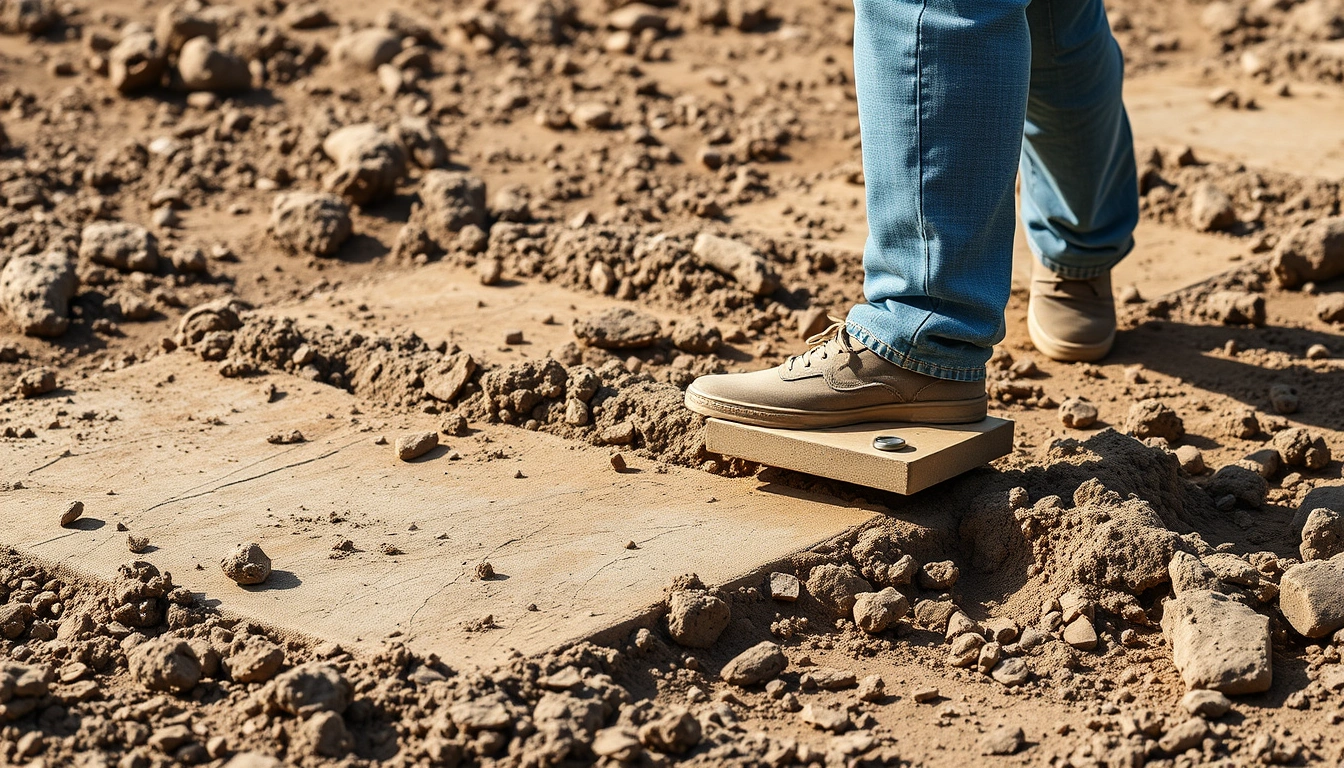
Clay soil causes concrete to sink differently than loose fill or sandy soil does. On sand, the problem is usually voids — water washes fines away, a gap forms, and the slab drops. That’s a one-time event you can fix by filling the void. On expansive clay, the slab isn’t just dropping into a void. The soil itself is changing volume underneath it — sometimes pushing the slab up, sometimes letting it fall — on a seasonal or even weekly schedule tied to soil moisture.
This is why the standard advice (“fill the void, lift the slab, done”) fails repeatedly on clay. You can fill a void that clay created, but if the clay dries out again next summer, it creates another one. The concrete leveling fix has to account for the movement cycle, not just the current position of the slab.
The soil type also affects what leveling material you can safely inject. Mudjacking slurry is heavy — typically 100 to 150 pounds per cubic foot. On a stable base, that’s fine. On clay that is already volume-unstable, adding significant weight can accelerate future settlement. Polyurethane foam, by contrast, weighs around 2 to 4 pounds per cubic foot. That weight difference isn’t trivial when the supporting soil has a plasticity index above 20. To understand how soil type changes every aspect of the repair process, the concrete leveling methods compared guide covers performance data across all major subbase conditions.
How shrink-swell soil movement actually works under a slab
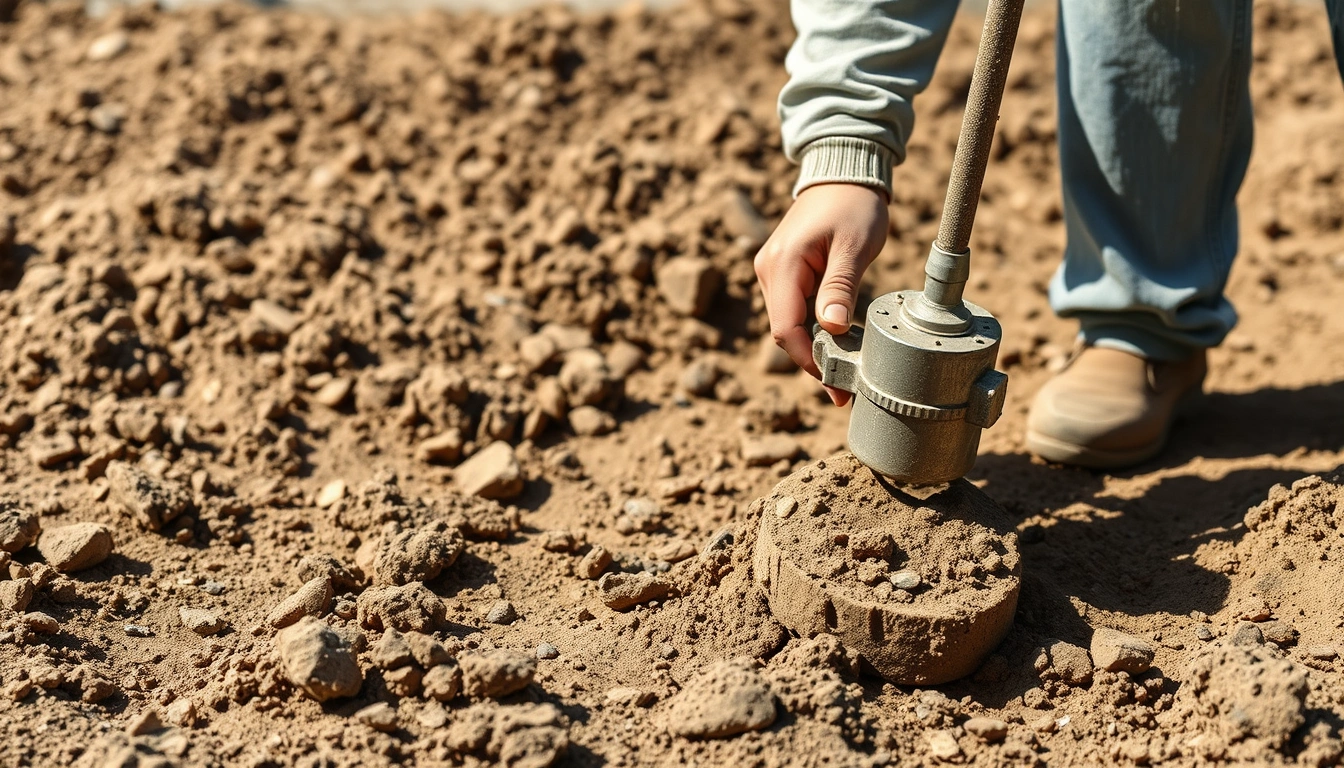
Shrink-swell soil — the technical term for expansive clay that cycles between swelling when wet and contracting when dry — moves in ways that are predictable once you know the pattern. Knowing what happens beneath the slab at each stage makes it much easier to choose the right concrete leveling approach and the right time to apply it.
Here’s what’s happening beneath a typical clay soil driveway:
- Dry season begins. Soil moisture drops below the soil’s shrinkage limit. Clay particles lose the water films between them and pull closer together. The soil mass shrinks — most noticeably in the vertical direction, pulling away from the underside of the slab.
- Void forms. A gap opens between the slab and the soil surface. In high-plasticity clays, this gap can reach 1 to 4 inches in a single season. The slab, now unsupported, begins to crack and drop under traffic load.
- Rain or irrigation arrives. Soil begins reabsorbing water. Clay swells. In some areas, the slab partially lifts back — but rarely to its original position, because cracking and edge settlement have already occurred asymmetrically.
- Cycle repeats. Each year, the slab ends up slightly lower and more fractured than the year before. After five to ten years of repeated cycles, the cumulative drop becomes obvious enough that homeowners call a contractor — often after the problem has grown far more expensive to correct.
Expansive clay commonly moves 1 to 4 inches vertically per seasonal cycle — which means a concrete leveling job performed at peak summer dryness may look perfect in October and be visibly off again by March.
The key visual tell: look at the gap between the slab edge and adjacent surfaces. If it opens and closes with the seasons, the soil is actively cycling. If it’s fixed and consistent year-round, the soil may have reached a stable moisture equilibrium — and in that case, concrete leveling alone may hold.
Which concrete leveling method is best for expansive clay soil?
Polyurethane foam injection is the better-matched concrete leveling method for expansive clay soil in most residential applications. It wins on clay for three specific reasons that go beyond marketing claims.
First, its low density (2–4 lbs/ft³ vs. mudjacking’s 100–150 lbs/ft³) avoids adding surcharge load to soil that is already weak in compression when wet. Second, polyurethane foam is hydrophobic — it repels water rather than absorbing it. Mudjacking slurry is water-based; in a cavity beneath a slab on clay, that introduced moisture can trigger additional swelling in the surrounding soil. Third, foam cures rigid in minutes, locking the slab position before the next moisture event arrives.
Mudjacking still has a place on clay soil — specifically when the slab is large, the lift required is small (under one inch), and budget is the primary constraint. But on active shrink-swell soil with documented seasonal movement, mudjacking’s recurrence rate is meaningfully higher. For a side-by-side breakdown across all major soil types, the full concrete leveling methods compared guide covers performance data in more depth.
| Factor | Polyurethane foam | Mudjacking |
|---|---|---|
| Material weight | 2–4 lbs/ft³ | 100–150 lbs/ft³ |
| Water introduced to subbase | None (hydrophobic) | Yes — water-based slurry |
| Cure time | 15–30 minutes | 24–72 hours |
| Cost per sq ft (2026) | $5–$25 | $3–$8 |
| Recurrence risk on active clay | Moderate (lower than mud) | High without soil treatment |
| Best application on clay | Driveways, garage floors, pool decks | Large-area slabs with minimal lift needed |
The step most contractors skip: stabilizing soil moisture before leveling
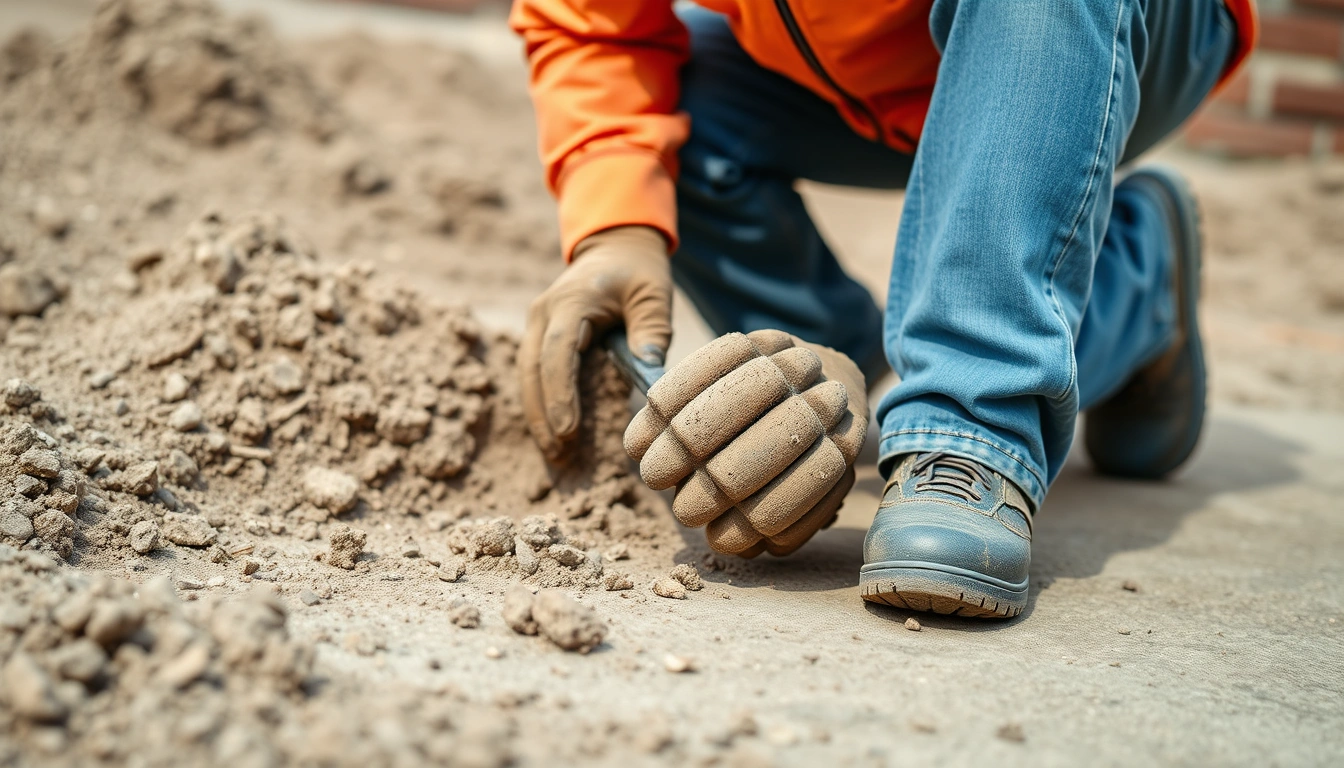
Choosing the right concrete leveling method is only half the battle. Soil stabilization is the missing variable in most leveling projects — and skipping it is the primary reason slabs re-settle within a few years. Stabilization doesn’t mean making the soil rigid; it means reducing the amplitude of the moisture cycle so the soil volume stays more consistent year-round.
There are two practical approaches available to homeowners in 2026:
- Lime injection (chemical stabilization): Contractors drill injection points and pump hydrated lime slurry into the upper 3–6 feet of soil. The lime reacts with clay minerals, reducing their water-absorption capacity. This durable treatment is commonly used under driveways and slabs that have failed twice or more. Cost typically runs $1,500–$4,500 for a standard residential zone.
- Controlled deep watering: Installing a drip system around the slab perimeter and maintaining consistent soil moisture (not wet, not dry — stable) can reduce seasonal movement substantially. This approach costs less and is often used in Texas and other high-shrink-swell regions by foundation repair specialists. It’s a maintenance commitment, not a one-time fix.
The honest trade-off: soil stabilization adds cost and lead time. If your slab has moved fewer than two inches, sits on moderately expansive clay (plasticity index 15–25), and you’re in a climate with moderate seasonal moisture swings, concrete leveling without formal stabilization may hold for 7–10 years with polyurethane foam. If PI is above 30, seasonal movement is visually obvious, or you’ve already had one leveling job fail, stabilize first. The extra $2,000 spent upfront beats paying for a third concrete leveling job in year four. You can also review concrete leveling cost factors to budget both steps together before getting quotes.
Will my leveled slab keep moving because of clay soil?
Yes — if the underlying clay soil is still actively cycling moisture, a leveled slab will continue to move. Concrete leveling corrects the current position of the slab; it does not stop the soil from expanding and contracting in future seasons. Whether that matters depends on how much movement your soil produces and whether the leveling material can accommodate minor shifts without creating new safety hazards.
This is the most important thing to understand before you spend money: no concrete leveling method permanently stops a slab from moving on active expansive clay. What the right method does is buy you significantly more time between re-settlements — 8–15 years with foam on stabilized soil versus 2–5 years with mudjacking on untreated clay, based on commonly reported contractor outcomes.
Watch for these signs that your slab is still in an active movement cycle after leveling:
- New cracks appearing within 6–12 months of leveling work
- Joints opening and closing visibly with the seasons
- Water pooling in new locations (indicating fresh differential settlement)
- The lifted edge re-dropping by more than a quarter inch in the first dry season
Slabs on untreated expansive clay soil commonly re-settle within 2–5 years of concrete leveling — the outcome depends not on the leveling job itself, but on whether soil moisture was addressed first.
Pay close attention to how the slab originally failed, because it changes what you need. A slab that settled because clay dried and shrank (a simple downward drop) is a straightforward candidate for concrete leveling. A slab that heaved upward when clay got wet, then cracked during the downswing, often has fractured sub-panels that shift independently — and those need slab repair or replacement, not just leveling. For issues specific to enclosed spaces on clay, concrete leveling for garage floor settlement covers the particular challenges of climate-controlled slabs where moisture gradients are steeper.
How to approach a clay soil leveling project: step by step
With the right method and timing established, the next step is executing the project in the correct sequence. Skipping steps two and three below is what separates concrete leveling jobs that hold for a decade from those that fail in a single wet season.
- Assess movement range, not just current position. Inspect the slab in both the wet season (spring) and dry season (late summer) if possible. Measure the gap at the slab edge in both seasons. A gap that changes by more than half an inch seasonally signals active soil cycling. Check the plasticity index of your local soil — your county extension office or a geotechnical engineer can confirm this for $200–$400.
- Decide whether to stabilize first. If PI is above 25 or seasonal movement exceeds one inch, plan soil stabilization before concrete leveling. Get two quotes from contractors who offer lime injection. Do not skip this step just because a leveling contractor says it isn’t necessary — many don’t offer it and therefore don’t recommend it.
- Choose the leveling method based on soil, not price. On active expansive clay, default to polyurethane foam. Reserve mudjacking for large-area, low-lift applications where budget is fixed and soil movement is mild (PI below 20, movement under half an inch seasonally).
- Time the leveling work correctly. Level during a period of moderate, stable soil moisture — not at peak dryness and not after heavy rain. In most climates, late spring (soil moist but stable) or early fall is ideal. Leveling at peak summer dryness means the slab is at its lowest, which leaves no buffer before the next wet cycle drives additional movement.
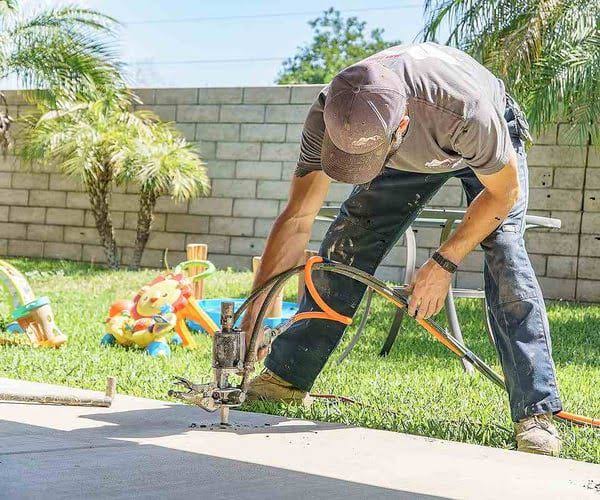
- Inspect injection hole placement. For a 10 x 20 foot driveway panel, expect 8–12 injection points for foam, spaced roughly 18–24 inches apart. Too few holes means uneven lift. Watch for any contractor who drills fewer than 6 holes on a standard two-car driveway — that’s insufficient for even pressure distribution on clay.
- Verify lift uniformly, not just at the edge. After concrete leveling, check the slab with a 6-foot straightedge. Acceptable variation is under 3/8 inch across any 10-foot span. A slab that’s lifted at the edge but still low in the center has been under-filled in the middle — common when contractors rush the foam injection sequence.
- Seal all control joints and cracks immediately. Clay soil’s worst enemy under a slab is concentrated water infiltration through open cracks. After leveling, seal every crack wider than 1/16 inch with a polyurethane joint sealant (not silicone). This step is often omitted and is frequently responsible for repeat calls within two years. For guidance on which sealant products perform best in high-clay environments, see our concrete crack repair guide.
- Set up a soil moisture maintenance plan. Whether you chose lime stabilization or not, establish a perimeter watering schedule for dry months. Three to four deep waterings per week within two feet of the slab edge during peak summer helps buffer the moisture gradient that drives shrink-swell cycling.
Method comparison table: clay soil vs. sandy soil vs. mixed fill
Soil type is the primary driver of method selection — more important than slab size, more important than cost. This table shows how the same concrete leveling method performs differently depending on what’s underneath, and helps you match the approach to your specific conditions.
| Soil type | Recommended method | Stabilize first? | Expected hold (years) | Key risk |
|---|---|---|---|---|
| Expansive clay (PI > 25) | Polyurethane foam | Yes, if actively cycling | 8–15 with stabilization; 2–5 without | Seasonal re-settlement |
| Moderately expansive clay (PI 15–25) | Foam preferred; mud acceptable for small lifts | Optional; deep watering sufficient | 5–12 | Moderate recurrence after drought years |
| Sandy soil / loam | Either method; mudjacking often sufficient | Rarely needed | 10–20+ | Erosion voids from water flow |
| Compacted fill (mixed) | Foam for precision; mud for large slabs | Depends on fill composition | 7–15 | Variable compression; inconsistent results |
For the sandy soil side of this equation, the failure modes are different enough that the method choice shifts entirely. Concrete leveling for sandy soil covers the void-based erosion patterns that dominate in non-clay substrates —
See also: concrete leveling methods compared
See also: concrete leveling for sandy soil
See also: concrete leveling warranty comparison
Related: concrete leveling cost statistics
Related: concrete leveling vs replacement decision
Related: warehouse floor leveling