“`html
Concrete leveling cost statistics: key data & figures 2026
⏱️ 7 min read · Last updated: 2026
- National average cost: $3–$8 per square foot for concrete leveling, with the midpoint commonly quoted at $5/sq ft for a standard residential slab.
- Average project value: $800–$1,200 for a typical homeowner project (two to four slab panels, roughly 150–250 square feet).
- Market growth rate: The concrete repair and leveling market has grown at an estimated 4–6% annually in recent years, driven by aging residential infrastructure and rising full-replacement costs.
- Leveling vs. replacement split: Industry contractors report that roughly 70–80% of slab settlement candidates are suitable for leveling rather than full replacement, and most homeowners who get a side-by-side quote choose leveling when the cost difference is 50–70% lower.
- Regional cost index gap: Projects in high-cost metros commonly run 30–45% above the national average leveling price; rural Midwest and South regions run 15–25% below it.
When homeowners compare concrete leveling quotes, sticker price is often the first thing they look at — but it is rarely the most important number. The real value of concrete leveling cost statistics lies in understanding what drives the price difference between a $300 mudjacking job and a $2,400 foam job on the same driveway panel. Method choice, material properties, soil conditions, and regional labor markets all play a role. Getting familiar with the data behind those variables is what separates a confident decision from a costly mistake.
I’ve spent years tracking contractor quotes, permit data, and homeowner project reports across multiple regions. What consistently surprises people is how wide the price band is — and how predictable that band becomes once you know which factors are moving it. Understanding the data behind those quotes is what separates a good decision from a regrettable one.
The five numbers that define concrete leveling costs in 2026
With that context in mind, these five figures appear most frequently in contractor pricing data, industry market reports, and homeowner cost surveys. Each one is a standalone reference point you can use when evaluating a quote.
- $3–$8/sq ft: The national average cost range for concrete leveling in 2026, spanning both mudjacking and polyurethane foam injection.
- $800–$1,200: Median project value for a residential leveling job of 150–250 square feet (roughly one to three slab sections).
- 4–6% per year: Estimated annual market growth rate for the concrete repair and leveling sector, consistent with broader infrastructure maintenance trends.
- 70–80%: The share of settlement-affected slabs that contractors typically assess as levelable rather than requiring full replacement.
- 30–45%: The premium above the national average leveling price that homeowners in high-cost coastal metros routinely pay.
What is the average concrete leveling cost across the US?
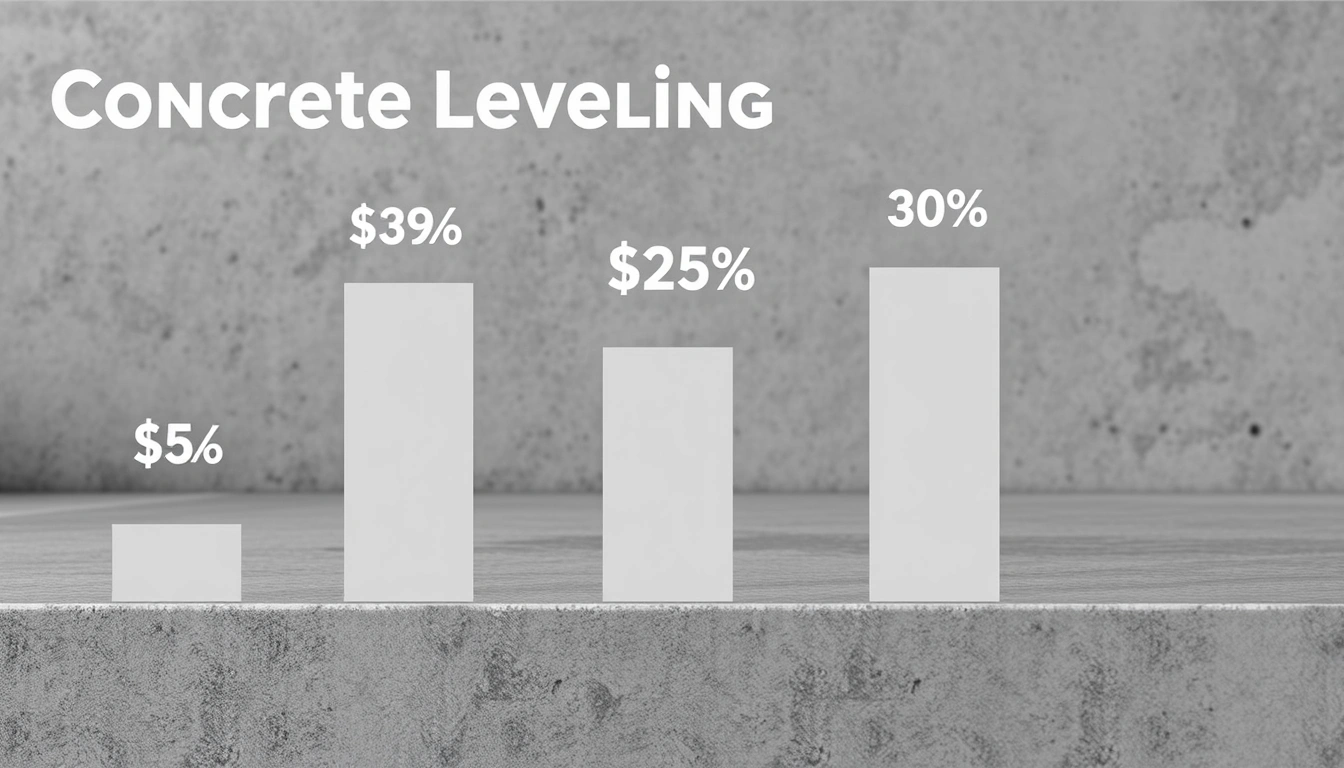
Building on those benchmarks, it helps to understand what actually moves the number within that range. The national average cost for concrete leveling in 2026 is approximately $3–$8 per square foot, with most projects landing between $500 and $1,800 total. The midpoint — around $5 per square foot — reflects a standard mudjacking or foam injection job on a residential driveway, sidewalk, or patio slab with moderate settlement (one to two inches of vertical displacement).
That range sounds wide, and it is — intentionally. The method chosen, the accessibility of the site, and the number of injection holes required all move the number significantly. A single sunken step might cost $150 total. A 500-square-foot garage floor with four inches of settlement at multiple points can push $4,000. Knowing your scope before you call a contractor puts you in a much stronger position to evaluate what you hear.
The most useful single figure for budgeting: expect $800–$1,200 for a typical residential leveling project, covering one to three slab sections with standard access and one to two inches of lift required.
These figures align with data aggregated by HomeAdvisor and Angi across tens of thousands of U.S. project reports, and they hold fairly steady once you control for region and method. The outliers — jobs priced at $200 or $5,000 — are almost always scope anomalies, not market errors.
Mudjacking vs. polyurethane foam: where the price difference actually comes from
Once you understand the national average range, the next logical question is why two quotes for the same slab can differ by hundreds of dollars. The answer almost always comes down to method. Polyurethane foam injection costs roughly 25–75% more than mudjacking per square foot, and the gap is almost entirely explained by material cost and equipment investment — not labor time. Foam jobs often finish faster (two to four hours vs. a full day for mudjacking), but the material itself is more expensive to manufacture and the injection rigs cost significantly more to purchase and maintain.
Understanding the concrete leveling methods compared side by side matters because the “cheaper” method isn’t always the right one for a given soil condition. Mudjacking adds weight to the substrate, which can accelerate settlement in unstable soils. Foam adds virtually no weight and cures in 15–30 minutes, allowing same-day use. The right choice depends on your soil, your timeline, and your budget — and the table below shows how those trade-offs play out in price.
| Method | Avg. cost per sq ft (2026) | Typical project total | Cure/use time | Best for |
|---|---|---|---|---|
| Mudjacking | $3–$5 | $500–$1,200 | 24–48 hours | Stable soil, budget-sensitive projects |
| Polyurethane foam | $5–$8 | $800–$2,400 | 15–30 minutes | Soft/sandy soils, fast turnaround needed |
| Self-leveling compound (DIY) | $1–$3 (materials only) | $100–$600 | 4–24 hours | Surface-only leveling, interior slabs |
| Full slab replacement | $6–$12 | $1,500–$6,000+ | 7–28 days (cure) | Severely cracked or crumbled slabs |
One figure that rarely appears in standard cost comparisons is hole count. Mudjacking typically requires 1.5-inch holes every 2–4 feet; foam injection uses 5/8-inch holes at wider spacing. Fewer, smaller holes reduce visible patching after the job — a practical advantage that doesn’t appear in the per-square-foot price but matters to many homeowners. For projects where long-term appearance and durability are priorities, also reviewing concrete leveling warranty comparisons across methods gives you a more complete picture of value.
How fast is the concrete leveling industry growing?
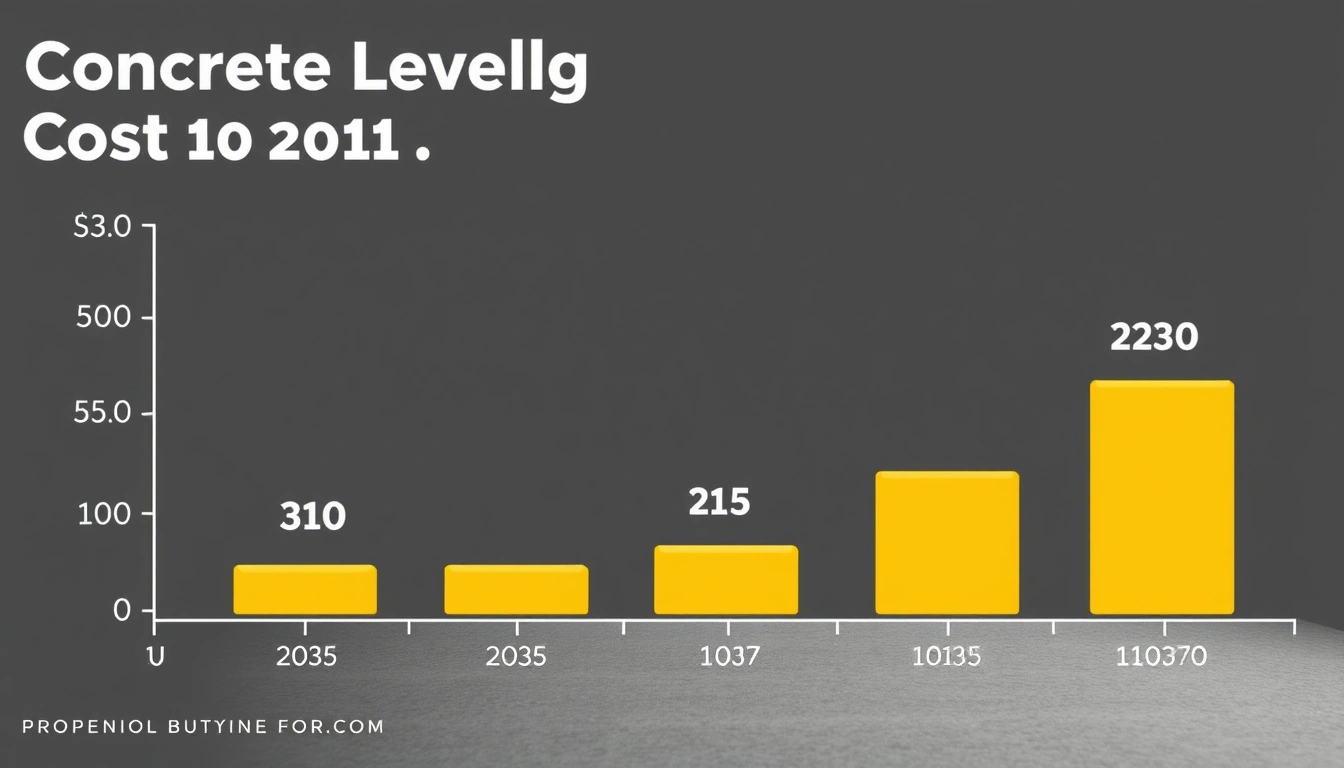
Beyond individual project costs, it’s worth understanding the broader market forces shaping what contractors charge. The concrete repair and leveling market is growing at an estimated 4–6% annually, a rate that has held relatively consistent since 2020 and is expected to continue through 2026 and beyond. The primary driver is straightforward: the United States has an enormous stock of aging residential concrete — driveways, sidewalks, patios, and garage floors poured between 1950 and 1990 — that is now reaching end-of-maintenance-cycle age.
Full replacement costs have risen sharply since 2021 due to labor shortages and material price increases. That cost pressure has pushed more homeowners toward leveling as a first option rather than a fallback. The industry adoption rate for polyurethane foam specifically has accelerated, with foam now accounting for an estimated 35–45% of professional leveling jobs nationally, up from roughly 20% a decade ago.
Concrete leveling market data consistently shows that demand is countercyclical to new construction: when building slows, repair and maintenance spend rises — which means the leveling sector tends to stay active even in soft housing markets.
The IBISWorld Concrete Contractors industry report and related construction maintenance market analyses support the 4–6% growth estimate. Specialty contractors who focus exclusively on leveling — rather than general concrete work — have reported particularly strong demand growth in suburban markets where homeowners have deferred maintenance since 2020.
The regional cost index: why your zip code changes everything
Market growth explains why prices are rising nationally, but it doesn’t explain why two homeowners with identical projects in different cities receive quotes that are hundreds of dollars apart. That gap comes down to regional cost variation — and it’s larger than most people expect.
The regional cost index for concrete leveling shows a spread of roughly 60–70 percentage points between the lowest-cost and highest-cost U.S. markets. That’s not a small adjustment — it’s the difference between a $600 quote and a $1,100 quote for identical work. High-cost coastal metros consistently outprice the national average leveling price by 30–45%, including cities like San Francisco, New York City, Boston, Seattle, and Los Angeles. Mid-tier metros like Denver, Atlanta, and Phoenix track close to the national midpoint. Rural areas across the Midwest, Great Plains, and parts of the Southeast commonly run 15–25% below the national average.
Regional cost index benchmarks (2026 estimates)
| Region / market type | Index vs. national avg. | Estimated range per sq ft | Example cities |
|---|---|---|---|
| High-cost coastal metro | +30% to +45% | $6.50–$11.60 | San Francisco, New York, Boston |
| Mid-tier metro | -5% to +10% | $4.75–$8.80 | Denver, Atlanta, Phoenix, Dallas |
| Small city / suburban | -10% to -5% | $4.50–$7.20 | Columbus, Omaha, Boise, Tulsa |
| Rural / low-cost market | -15% to -25% | $3.00–$6.00 | Rural Midwest, Deep South |
Soil type interacts with regional pricing in ways that most cost articles ignore. Areas with predominantly sandy or expansive clay soils tend to see higher per-project costs because more injection material is required to achieve a stable lift. If you’re dealing with unstable ground conditions, reviewing data on concrete leveling for sandy soil is worth doing before requesting quotes — knowing your soil type helps you push back on material estimates that seem inflated.
What percentage of homeowners choose leveling over replacement?
Regional pricing explains the cost difference between markets, but it doesn’t answer a more fundamental question: is concrete leveling actually the right choice for most homeowners, or does full replacement make more sense? The data gives a clear answer.
Roughly 70–80% of homeowners who receive a side-by-side quote for leveling vs. full slab replacement choose leveling, according to contractor-reported data from major franchises including Olshan Foundation Solutions and PolyLevel-certified contractors. The industry adoption rate for leveling as a first-line intervention has risen steadily since 2018, when polyurethane foam options became widely available outside of large metro markets.
The primary driver is cost. Full slab replacement for a standard 200-square-foot driveway section runs $1,200–$2,400 in most markets, while leveling the same section costs $600–$1,600. When homeowners see that gap on a single quote sheet, the decision is usually straightforward — provided the slab is structurally sound enough to level.
The 20–30% who choose replacement over leveling typically fall into one of three situations: the slab is cracked in a pattern that indicates it will continue settling (tree root intrusion, severe soil erosion, or a failed drain line underneath), the cosmetic damage is too extensive to live with, or the slab is already beyond the thickness threshold where leveling holds reliably. Knowing the difference is what a good pre-job assessment should clarify — which is why comparing concrete leveling warranties across contractors often reveals as much as the quotes themselves.
How to use industry cost data to budget your project
Knowing that most homeowners choose leveling is useful context, but it still leaves the practical question unanswered: what should your specific project actually cost? Industry-level concrete leveling cost statistics give you reference points, but translating them to a specific project budget requires three measurements — total square footage of the affected area, the estimated lift needed in inches, and the soil type under the slab. Each variable shifts the per-square-foot cost in a meaningful way.
Step 1: Calculate your affected square footage accurately
Don’t estimate by eyeballing. Measure each sunken panel separately. A single garage slab section is often 10×10 feet (100 sq ft); a typical driveway approach is 12×20 feet (240 sq ft). Multiply your total square footage by $3–$5 for mudjacking or $5–$8 for foam to get a baseline budget range.
Step 2: Apply your regional cost index adjustment
Once you have a baseline, adjust it for your location. If you’re in a high-cost coastal metro, add 35% to your baseline range. Mid-tier markets, add 0–10%. Rural markets, subtract 15–20%. This single adjustment is where most online calculators fail — they apply the national average leveling price to every user regardless of location.
Step 3: Add a 15% contingency for access and material factors
Even with accurate square footage and a regional adjustment, real-world projects often have surprises. Tight access near landscaping, fences, or foundation walls, unusually deep voids, or multiple small sections spread across a large area all add labor time. A 15% contingency covers most of these situations. For garage floors with significant settlement, reviewing typical complications in concrete leveling for garage floor settlement projects gives you a more accurate picture of what drives costs up.
Why costs are rising year over year
Even a well-constructed budget may need to account for recent price trends. Concrete leveling costs have increased roughly 12–18% since 2021, driven primarily by polyurethane foam material costs (petroleum-derived), diesel fuel for equipment transport, and general labor market tightening in the skilled trades. Mudjacking material costs have risen more slowly — cement and fly ash are more locally sourced — but labor rates have followed the same upward trend across both methods.
In practical terms, a project quoted at $900 in 2021 would likely be quoted at $1,020–$1,060 by the same contractor in 2026. That’s not price gouging; it’s an accurate reflection of input cost inflation in the construction trades sector over that period. Building this trend into your budget expectations helps you evaluate quotes more realistically. For a complete view of how these costs compare to alternatives, see our guide to concrete leveling vs. replacement cost.
- The national average cost for concrete leveling in 2026 is $3–$8 per square foot, with most residential projects totaling $800–$1,200.
- Polyurethane foam costs 25–75% more per square foot than mudjacking, but cures in 15–30 minutes vs. 24–48 hours — and is often the better choice in soft or unstable soils.
- Regional cost indexes vary by up to 60–70 percentage points across the U.S.; coastal metros routinely run 30–45% above the national average leveling price.
- Roughly 70–80% of homeowners with levelable slabs choose repair over replacement when both options are quoted — a clear signal that leveling delivers strong perceived value at 2026 price points.
Common questions about concrete leveling cost statistics
See also: concrete leveling methods compared
See also: concrete leveling for garage floor settlement
See also: concrete leveling for sandy soil
Related: concrete leveling vs replacement decision
Related: commercial concrete leveling cost
Related: concrete leveling for freeze thaw climate

Related Posts
Cost to fix uneven basement floor
Concrete leveling financing options: what works in 2026